
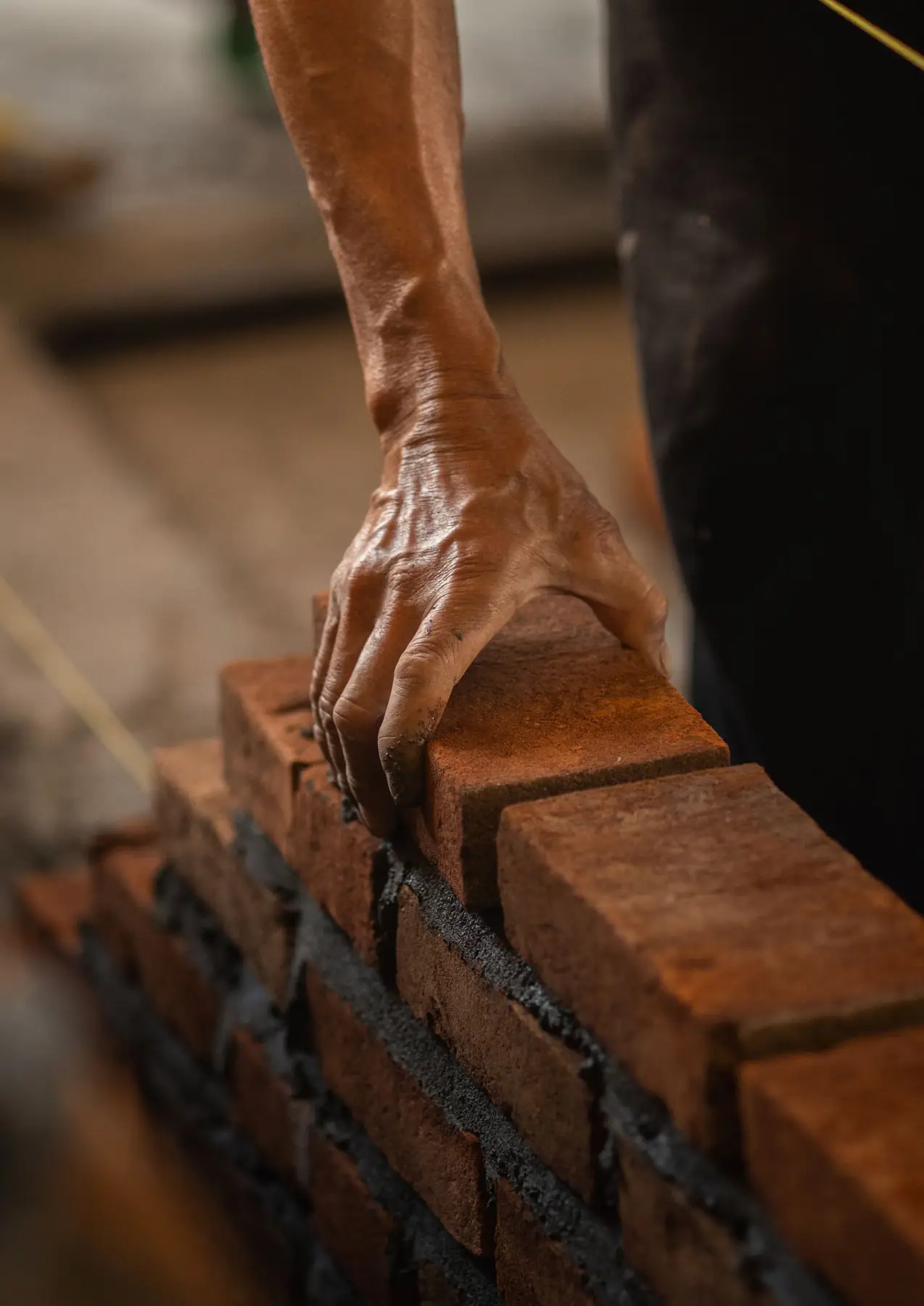
Why does hard mortar damage old Philadelphia brick chimneys?
Old local brick has a hard outer face and a much softer inside. Repoint a chimney with a mix tougher than its brick and the joint no longer yields, and the stress from water and freezing goes into the brick, which cracks and spalls. The Park Service's repointing guidance asks for a new joint that is weaker, and breathes more freely, than the masonry around it.
Philly Chimney & Fireplace Repair · November 7, 2026
How old Philadelphia brick is built
The City's Philadelphia Rowhouse Manual says brick is everywhere in Philadelphia and most of it came from local makers. Between 1887 and 1892 alone, nearly 45,000 houses went up, most of them rowhouses. The manual explains that the fired outer face of that brick is the durable part, while the interior is much softer.
Once the face is lost, water gets into the soft core and the brick wears away quickly. On a chimney, which takes rain, wind and freezing from every side plus warm, moist exhaust from inside, that loss can happen fast.
Butter joints
Many 19th-century rowhouses were laid with very thin mortar lines called butter joints. The Rowhouse Manual says this mortar needs to be removed by hand, not by sawing out a larger joint, and that the new mortar needs properties similar to the brick.
A grinder blade is wider than a butter joint. Running one along the joint chews the edges of every brick, widens the line and changes the look of the whole stack. Hand raking is slower, and on a thin-jointed chimney it is the only way to keep the brick edges intact.
What Preservation Brief 2 says
NPS Preservation Brief 2, Repointing Mortar Joints in Historic Masonry Buildings, is the federal guide most preservation reviewers follow. Its main points for a chimney:
- New mortar must be softer, measured in compressive strength, and more vapor-permeable than the masonry units.
- Nor should it be any harder than the original lime mix.
- Mortar tougher than the brick has no flex, and the brick pays for it with cracks and spalled faces that do not heal.
- Traditional mortar was about 1 part lime putty to 3 parts sand; portland cement was not common in the United States until the early 20th century.
- Masonry cements are generally not recommended for historic masonry.
How to spot a bad repair
Look for gray, smooth joints that stand proud of the brick while the brick faces around them flake or hollow out. Cracks that run through bricks instead of along the joints are another clue, as is mortar smeared over the brick edges. Tar or cement coatings are a third: the Historical Commission's Diamond Street manual advises against covering masonry chimneys in tar, cement or stucco, because they trap water inside.
Philadelphia's weather adds pressure. NOAA's 1991–2020 normals put Center City at about 62 nights a year with a low of 32°F or colder, and most suburban stations above 100, with 42 to 52 inches of rain and melted snow a year.
How we repoint
Old joints come out by hand to an even depth; the Diamond Street manual suggests about two and a half times the joint height. The new mix is lime-rich and picked to stay weaker than the brick while matching the old joints in color and texture, then tooled to the original profile. We only point when temperatures stay up for several days after.
Repointing the stack typically runs $500–$2,500. Where brick faces have already spalled, replacing those bricks typically runs $1,000–$3,500. A breathable water repellent, when the brick needs one, typically runs $150–$820; a sealer that forms a film behaves like paint and traps water.
On a historic-register property, pointing needs Historical Commission review. Elsewhere in Philadelphia, L&I says pointing often needs no permit.
Answers
Follow-up questions
What is the difference between tuckpointing and repointing?
People use the words loosely. On an old chimney the job that matters is the same: rake out failing mortar by hand and replace it with a softer, matching mix.
Is a portland cement mortar ever right?
Preservation Brief 2 allows lime-cement mixes where they match the historic mortar, but the new mortar should never be harder than the brick. West Chester's HARB, for example, recommends 1 part white portland, 1 lime, 5 sand for historic chimney brick.
Can I just seal the chimney instead of repointing?
A sealer does not fix open joints. Repoint first, then add a breathable water repellent only if the brick needs it.
Next up
Other Philly chimney notes
 My neighbor built above my chimney. Who has to fix it in Philadelphia?When the house next door goes up a floor, your chimney can end up too short. What Philadelphia's B-3307.1 makes the builder offer, and when it's on you.
 Does my chimney work need Philadelphia Historical Commission approval?On a designated Philadelphia property, chimney pointing counts as an alteration. How staff review works, the mortar sample, and the Diamond Street B-vent rule.
 What chimney and carbon monoxide rules apply when I sell a Philadelphia house?Philadelphia sellers certify smoke and CO alarms in writing. The PA REALTORS® form asks when chimneys were last cleaned. What the law asks and what it doesn't.

Schedule
Choose a morning or an afternoon.
Sunday through Friday, arrival between 8 and 11, 11 and 2, or 2 and 5. The look costs nothing, and a person phones you the day before.