
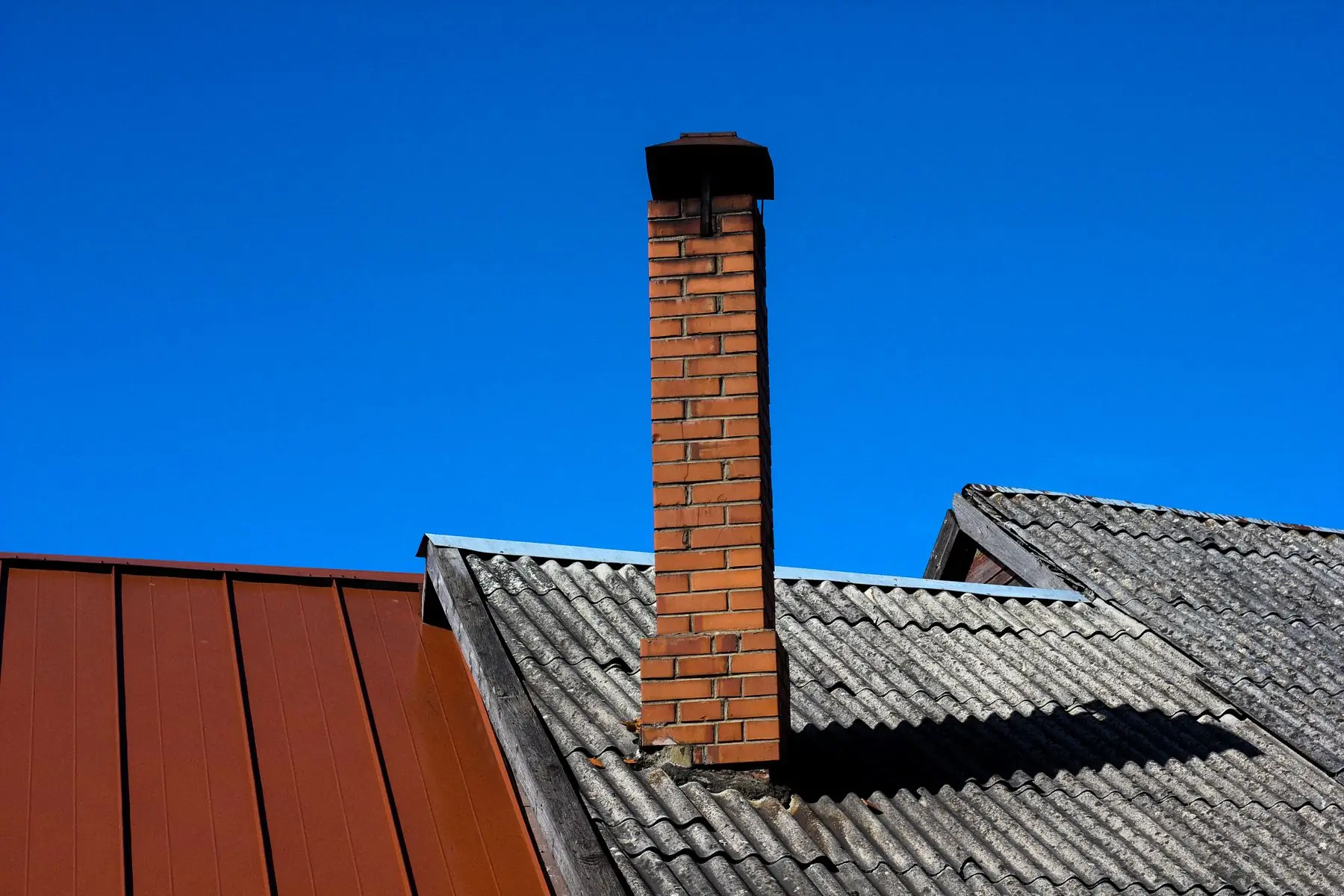
Birds, Squirrels and Raccoons Out of the Chimney
Removing an animal or nest from a chimney typically runs $600 to $1,500. A stainless cap, typically $200 to $700 installed, is what keeps the next one out.
An uncapped chimney is a dry, sheltered hollow to a raccoon, squirrel or bird. Philadelphia's houses are old, four in ten built before 1940 by the Census Bureau's 2024 count, and many of their brick stacks were left open when a coal stove or old furnace came out. The City's Rowhouse Manual lists animal nests alongside soot as the reason to have a sweep look at chimneys once a year.
A nest in a fireplace flue is a nuisance. A nest in the flue that vents your furnace or water heater is a safety problem, because the exhaust has nowhere to go but back into the house. UGI's safety advice says it directly: a damaged or blocked chimney could let exhaust gas, including carbon monoxide, into your home. That is why we treat every animal call as a flue check as well.
When to call
- Scratching, chirping or rustling inside the wall by the chimney
- Twigs, leaves or droppings falling into the firebox
- A musty or rotten smell near the fireplace
- Birds circling and dropping into the chimney at dusk
- The furnace or water heater spilling exhaust, or a CO alarm going off
The visit, step by step
- Find out who is in thereThe free visit starts at both ends of the flue, roof and firebox, to learn what moved in, how many and where.
- Remove the animal and nestWe get the animal out, pull the nest and droppings, and clear the smoke shelf.
- Check the flueOnce it is empty we check the tiles, damper and any appliance connection for damage.
- Cap itA stainless cap with mesh sides goes on so the flue cannot be used as a den again.
What happens at the visit
We look from the roof and from the firebox or cleanout to see what is in the flue. Birds and squirrels usually come out on the first visit. A raccoon with young can take longer, because the family needs to leave together. The price for the removal is written down at the inspection, before any work starts.
Once the flue is empty we clear the nest, the droppings and whatever fell onto the smoke shelf, then check the tiles and damper. Animals tear at mortar and insulation, and a nest that sat for a season holds a lot of moisture against the masonry.
Why the cap matters more than the removal
If the chimney stays open, something else will move in. A stainless cap with mesh sides stops animals, keeps rain out of the flue and keeps leaves from blowing in. It typically costs $200 to $700 installed. On a stack with several flues, one cap may cover them all or each flue may get its own, and we show you both options at the inspection.
The Historical Commission's Diamond Street manual, written for one Philadelphia district but sound advice anywhere, says even unused chimneys should be kept in good repair and capped. An empty, open flue is the easiest den on the block.
Don't screen a gas vent yourself
It is tempting to staple hardware cloth over the top. For a gas furnace or water heater flue, PGW's safety advice is clear: do not cover appliance vent openings with mesh or netting. Lint, ice and debris clog a loose screen, and a clogged screen on a gas flue blocks the exhaust. A proper cap is sized so it does not choke the flue it protects.
Answers
Animal & Nest Removal questions
There's a bird in my chimney. What should I do?
Keep the damper and fireplace doors shut so nothing reaches the living room, and skip the idea of smoking it out with a fire; smoke can kill it in the flue and leave you a worse problem. Call us and we will come take a look.
Is a blocked flue dangerous?
It can be. A nest in a fireplace flue mostly means smoke in the room. A nest in a furnace or water heater flue can push carbon monoxide into the house. If a CO alarm sounds, get everyone outside and call 911.
What are the signs of carbon monoxide in the house?
UGI lists headaches, dizziness and flu-like symptoms, plus condensation on the windows. Symptoms that ease when you leave the house are a warning sign. A working CO alarm is the only reliable alert.
Do I really need a chimney cap?
If you want animals and rain out of the flue, yes. A stainless cap typically runs $200 to $700 installed. On a factory-built chimney with a framed chase, the chase cover is priced at the inspection.
How much does animal removal cost?
Typically $600 to $1,500, depending on the animal, how many there are and how hard the flue is to reach. The inspection that tells you which is free.
Same family of jobs
Sweeping, looking and smoke trouble

Schedule
Choose a morning or an afternoon.
Sunday through Friday, arrival between 8 and 11, 11 and 2, or 2 and 5. The look costs nothing, and a person phones you the day before.