Installing Wood Stoves and Wood Inserts
Burning wood in a stove can heat a room or a whole floor, but only with its own properly sized flue. Installing a wood stove usually costs $3,000 to $8,000; for a wood insert with its stainless liner, we quote at the visit.
West of Philadelphia, wood heat is still part of daily life. The Census counts about 4,900 homes in Lancaster County and about 4,300 in Berks that use wood as their main heat, around 2.3 to 2.6 percent of homes, above Pennsylvania's 2.1 percent and well above the national 1.3. In Strasburg the share reaches 6.5 percent. Many more homes keep a stove alongside oil, propane or a heat pump.
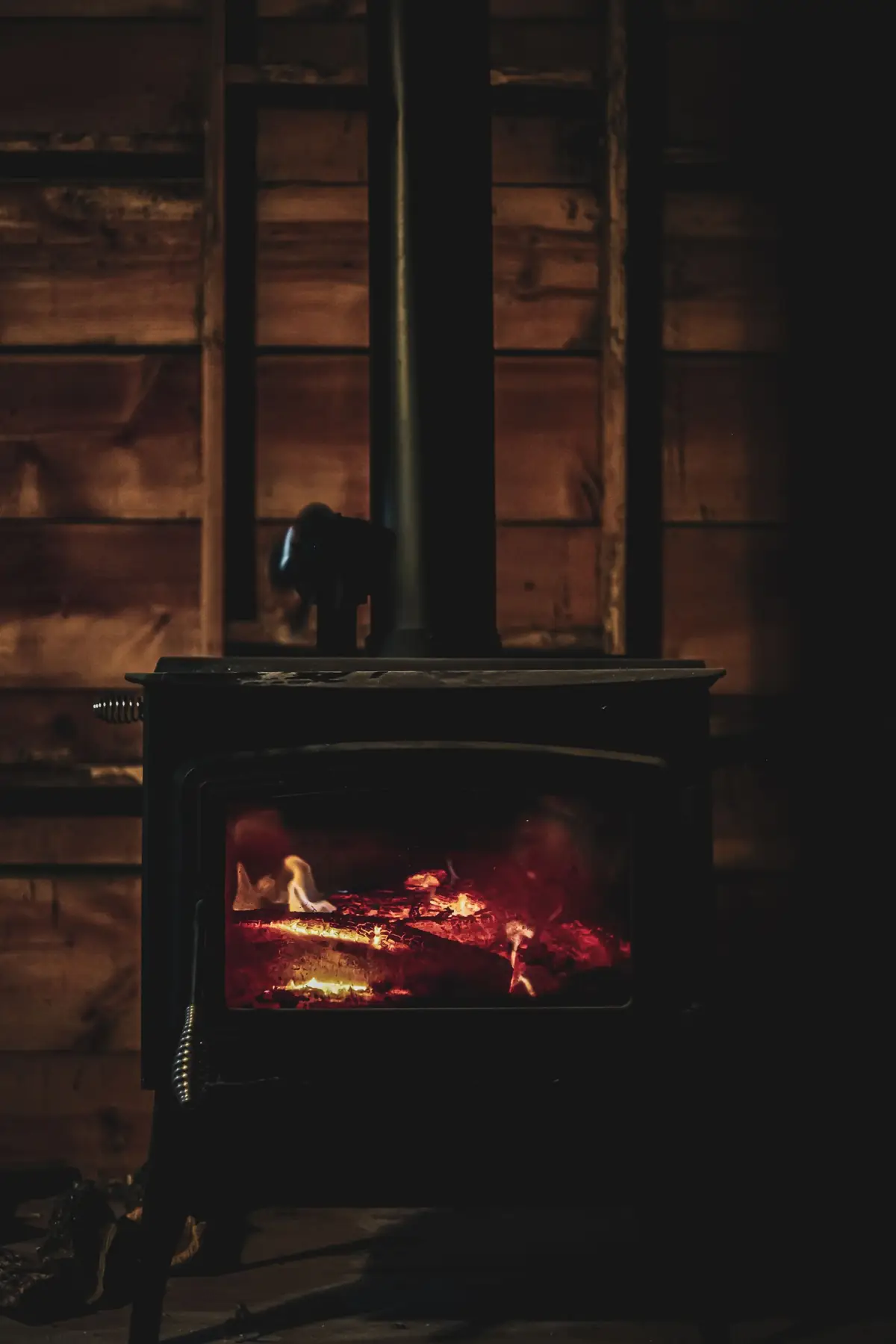
A stove is only as safe as the venting behind it. It burns hotter and longer than an open fireplace, sends more creosote up the flue, and needs steady draft to burn clean. Most of an installation is the venting: the liner or chimney, the connector, the clearances to walls and floors, and the hearth pad under the stove.
When to call
- An open fireplace you want to turn into real heat
- An old stove with rusted pipe or a cracked door
- A farmhouse or stone house with an unused flue
- Oil or propane bills you want to lean on less
- No chimney at all where you want the stove
The visit, step by step
- Site visit, freeWe study the room, the chimney or where a new flue could go, the floor and nearby walls, and talk through how you plan to use the stove.
- Choose stove and ventingStove size follows the space you want to heat. The flue is sized to the stove's outlet, and the hearth and clearances follow the stove's listing.
- Check the rulesWe check what your township or borough requires before the install; in Philadelphia, appliance installs take a mechanical permit.
- Install, test, teachStove, connector and liner or chimney go in, we run a test fire, and we show you how to load and run it cleanly.
One wood appliance, one flue
The rule that matters most is short. Section M1801.12 of the 2021 International Residential Code says a solid fuel-burning appliance or fireplace shall not connect to a chimney passage venting another appliance, and G2427.5.6.1 says the same from the gas side. A stove cannot share the oil boiler's flue, the water heater's flue, or the flue of a fireplace in the room below. In older farmhouses where a stove was tied into whatever flue was handy years ago, that is the first thing we check.
If the chimney has a free flue, a stainless liner sized to the stove usually goes inside it. If it doesn't, an insulated factory-built chimney can run up through the house or along an outside wall. Those are different jobs at different prices, which is why the site visit comes first.
Stove or insert
A freestanding wood stove sits on a hearth pad in the room and radiates heat in every direction; it can go almost anywhere a flue can reach. A wood insert fits inside a masonry fireplace you already have, turning it into a closed, efficient firebox. An insert needs a full-height stainless liner from its outlet to the top of the chimney. Putting in a wood stove usually lands at $3,000 to $8,000 in 2026, by HomeGuide's national cost data; a wood insert with its liner is priced at the visit.
Rules that do and don't apply
People often ask about Pennsylvania's outdoor wood boiler rule. That rule, 25 Pa. Code §123.14, covers outdoor wood-fired boilers, with new units set at least 50 feet from the property line and a stack at least 10 feet tall. It does not govern an indoor wood stove. We found no Philadelphia ban on indoor wood stoves or fireplaces; the city's open-burning limits are about outdoor fires.
The federal incentive for buying a qualifying stove ended with 2025, and we know of no Pennsylvania stove rebate, so plan for the full cost. Wood counts as a fossil fuel under Pennsylvania's Act 121, and Philadelphia requires CO alarms in homes with fuel-burning appliances, so put a working CO alarm near the room with the stove wherever you live.
Dry wood and a clean flue
A stove fed wet wood smolders, coats the liner with creosote and blackens the glass. Split wood stacked off the ground with the top covered for a season or longer burns hotter and cleaner. Seasoned wood shows cracks in the ends, feels lighter, and knocks hollow when two pieces strike. Plan on a yearly inspection and sweep; we price the sweep during that free visit.
Answers
Wood Stove & Insert Installation questions
Is a wood stove safe to install? What about codes and clearances?
Yes, when it has its own flue, the clearances and hearth protection in its listing, and a properly sized liner or chimney. The 2021 IRC bars a wood stove from sharing a flue with any other appliance.
Can I install a wood stove if my house has no chimney?
Often. An insulated factory-built chimney can run up through the house or along an outside wall. The site visit shows which route works and what it costs.
Do I need a liner with a wood insert?
Yes. A wood insert exhausts through a stainless liner matched to its outlet and running the full height of the chimney. The insert and liner are priced together at the visit.
Can I put an outdoor wood boiler on my property in Pennsylvania?
That falls under 25 Pa. Code §123.14, which sets setbacks of 50 feet from the property line and a 10-foot stack for new units, and your township may have its own rules. It is a separate matter from an indoor stove.
Is there still a tax break for buying a wood stove?
Not from the federal government: the incentive for qualifying stoves ended after December 31, 2025. We found no Pennsylvania stove rebate either, so budget for the full installed cost.

Schedule
Choose a morning or an afternoon.
Sunday through Friday, arrival between 8 and 11, 11 and 2, or 2 and 5. The look costs nothing, and a person phones you the day before.